Darknet Markets 2026:
The dark web is part of the deep web but is built on darknets: overlay networks that sit on the internet but which can't be accessed without special tools or software like Tor. Tor is an anonymizing software tool that stands for The Onion Router — you can use the Tor network via Tor Browser.
| Darknet Market | Established | Total Listings | Link |
|---|---|---|---|
| TorZon Market | 2022 | 140+ | Onion Link |
| Nexus Market | 2024 | 600+ | Onion Link |
| Abacus Market | 2022 | 100+ | Onion Link |
| Ares | 2026 | 100+ | Onion Link |
| Cocorico | 2023 | 110+ | Onion Link |
Updated 2026-09-19
How to Find a Working Darknet Market Link
Locating a functional .onion address for a darknet market is the first step. These addresses are not found through standard search engines. The process relies on specialized forums and link directories that act as community hubs. Users share and verify URLs, discussing their reliability. A link from a trusted source is more likely to be legitimate and secure.
Markets frequently change their addresses to maintain operational security, a practice known as rotating URLs. This means a link that worked yesterday may not work today. Therefore, using a single, static source for links is ineffective. The most current addresses are found through real-time community verification on these platforms.
When evaluating a potential market link, several factors indicate its authenticity:
- The address uses the standard .onion protocol.
- The market website requires a PGP key for login verification, proving it is the genuine site and not a phishing copy.
- Community feedback on forums confirms the link is active and the market is functioning normally.
This method of discovery ensures access to platforms that facilitate easy shopping for a wide range of goods, providing a direct and user-friendly experience similar to surface web e-commerce.
Find Reliable Darknet Markets on Forums
Forums dedicated to drknet commerce serve as the primary community hubs for discovering current, verified market links. These platforms function as dynamic repositories where users share and discuss operational .onion addresses. A link directory on a reputable forum is more reliable than a standalone list found through a search engine, as it benefits from real-time user feedback.
When a market's URL changesa frequent occurrence for security reasonsforum members are typically the first to post updates. The community actively validates these links, warning others of phishing sites or exit scams. This collective verification process is a critical layer of protection. To effectively use these resources:
- Identify established forums with active moderation and a long history.
- Prioritize links that have multiple user confirmations of their validity within recent discussion threads.
- Cross-reference any found URL against other trusted directories to ensure consensus.
The discourse within forum threads provides qualitative data beyond a simple link. Users detail their transaction experiences, comment on a vendor's reliability, and note the market's interface functionality. This transforms a directory from a static list into a vetted gateway, significantly increasing the safety and efficiency of accessing drknet markets for procurement.
Buying Drugs on the Darknet is Just Like Online Shopping
The operational framework of a darknet market is functionally analogous to that of a mainstream e-commerce platform. A user creates an account, browses product listings organized into categories, and selects items for purchase. Each vendor maintains a dedicated shop page with descriptions, prices, and customer feedback, which serves as a critical reputation system. This feedback mechanism is the cornerstone of trust, allowing buyers to make informed decisions based on the experiences of others.
The transaction process mirrors conventional online shopping but utilizes cryptocurrency for payment. A buyer adds a product to their cart, proceeds to checkout, and sends the required amount of Bitcoin or Monero to a market-controlled wallet. The funds are then held in escrow by the market's automated system, not released to the vendor until the buyer confirms satisfactory receipt of the goods. This protects the buyer from fraudulent vendors who might not ship products.
Communication occurs through an internal messaging system, enabling buyers and vendors to discuss orders without leaving the platform. After delivery, the buyer finalizes the order, which releases the escrowed funds to the vendor and enables them to leave a review. This entire cycle is designed for efficiency and dispute resolution, with market administrators acting as mediators if a transaction encounters problems. The design prioritizes a seamless user experience that facilitates commerce while managing risk through structured processes.
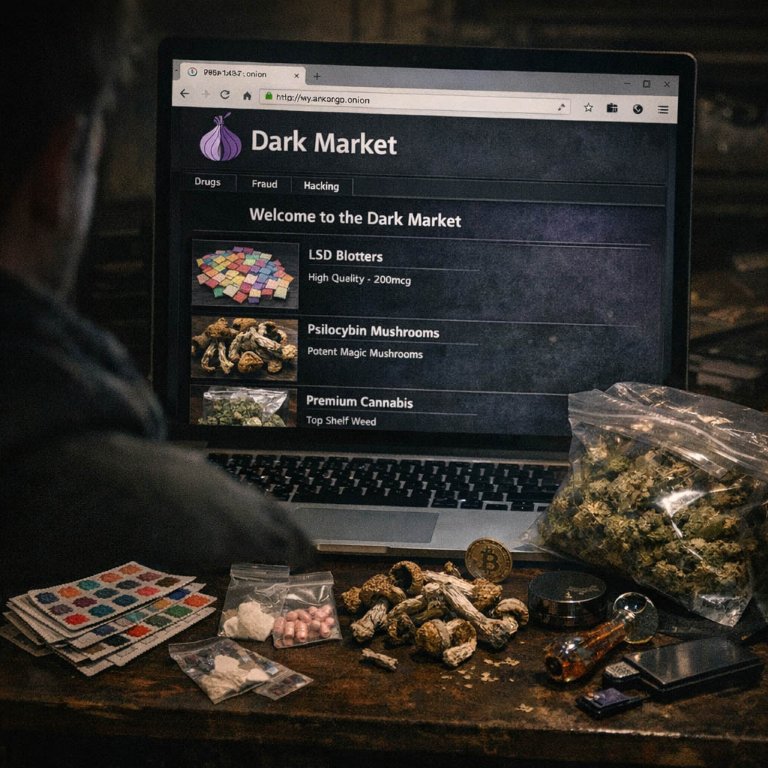
How Crypto Keeps Your Darknet Purchases Private
Cryptocurrency is the financial backbone of darknet commerce, enabling transactions that prioritize user privacy. The mechanism is straightforward: a buyer transfers digital currency from their personal wallet to the market's specified address to fund their account or complete a direct payment. This process bypasses traditional financial institutions, removing the need to share personal banking details with the vendor.
The privacy advantage stems from the pseudonymous nature of blockchain transactions. While the transaction ledger is public, the identities behind the wallet addresses are not inherently tied to real-world individuals. To enhance this privacy, specific practices are employed:
- Using privacy-focused coins like Monero (XMR) is recommended. Monero's blockchain obfuscates sender, receiver, and transaction amount, providing a stronger privacy guarantee than transparent blockchains like Bitcoin.
- For Bitcoin, the practice of tumbling or using a trusted mixing service can break the chain of analysis by pooling and redistributing funds.
- Acquiring cryptocurrency through non-KYC (Know Your Customer) methods, such as peer-to-peer exchanges or Bitcoin ATMs, prevents the initial link between your identity and the crypto funds.
Markets integrate these currencies directly, with most offering Monero and Bitcoin wallets. The payment flow is designed for simplicity: the market generates a unique deposit address, the user sends the exact amount, and the market's internal system credits the account balance after confirming the blockchain transaction. This system facilitates a seamless exchange where financial privacy is a built-in feature, not an afterthought.
How Escrow Makes Darnet Drug Trade Safer and More Reliable
Escrow services function as a neutral third party in a darknet transaction. The buyer sends cryptocurrency to the escrow system, where it is held securely. The seller then ships the product. Only after the buyer confirms receipt and satisfaction does the escrow release the funds to the seller. This mechanism directly addresses the inherent trust deficit in anonymous environments.
The operational model prevents common fraud scenarios. A dishonest seller cannot receive payment without delivering the goods, as the funds are locked. Similarly, a dishonest buyer cannot claim non-receipt to get a refund while keeping the product, as the seller has proof of shipment. The escrow agent arbitrates any disputes based on provided evidence, such as tracking information. This creates a balanced incentive structure for both parties to act honestly.
For the buyer, escrow is a primary tool for risk mitigation. It allows for the evaluation of product quality before the seller is paid, mirroring the consumer protection found in conventional e-commerce. Markets that mandate escrow for all or most transactions typically see higher user trust and sustained activity. The presence of a robust escrow system is often a marker of a professional and stable darknet market.
Technical implementation is crucial. A secure escrow service uses a multisignature cryptocurrency wallet. This requires two or three cryptographic keys to authorize a transaction. A typical 2-of-3 multisig setup involves keys held by the buyer, seller, and market escrow. Release of funds requires agreement from any two parties, preventing any single entity from stealing the coins. This cryptographic approach is more transparent and secure than a system where the market admins hold all funds in a central wallet, which presents a single point of failure.
While not infallible, escrow services significantly elevate the security and reliability of darknet commerce. They enable complex trade by providing a framework for enforceable agreements, fostering a functional marketplace where privacy and successful trade coexist.

How Anonymity and Security Make the Darknet Work
The foundation of every successful darknet transaction is a robust operational security model. This model prioritizes two inseparable elements: anonymity and security. Anonymity protects your identity, while security protects your data and funds. Without both, the entire process is compromised.
Anonymity starts with the Tor Browser. It routes your connection through multiple encrypted layers, masking your physical location and IP address. This is non-negotiable for accessing any .onion address. Pairing Tor with a VPN adds an extra layer of network obfuscation, making it significantly harder for any single point to correlate your activity.
Security extends to your communications and finances. All market interactions should use PGP encryption. This ensures that only the intended recipient, be it a vendor or market support, can read your messages. Financially, cryptocurrencies like Monero or Bitcoin are used for their pseudo-anonymous nature. However, tumbling or using built-in market mixers is a critical step to break the transaction trail on the blockchain, enhancing financial privacy.
The market's own infrastructure is part of this equation. A legitimate darknet market employs:
- End-to-end encrypted messaging
- Two-factor authentication (2FA) for user accounts
- A reliable escrow service that holds funds until the buyer confirms receipt
This focus on dual-layered protection creates a trusted environment for commerce. It allows for the efficient acquisition of a wide range of goods, from digital products to pharmaceuticals, with a discretion and convenience that surface web platforms cannot match. The system is designed for user empowerment, placing control of privacy directly in the hands of the individual.
How Link Updates Keep the Darknet Trade Secure and Running
The operational lifespan of any given darknet market is inherently finite. Unlike conventional e-commerce platforms, these services operate under constant pressure, leading to a dynamic environment where onion URLs are frequently cycled. A link that was functional yesterday may be completely inaccessible today. This volatility is not a sign of poor service but a standard security and operational protocol.
Administrators routinely update market addresses to mitigate distributed denial-of-service (DDoS) attacks and to disrupt phishing campaigns that rely on static links. Consequently, users must adopt a proactive approach to sourcing current URLs. Relying on a single, outdated bookmark is ineffective. The process involves regular consultation with verified community forums and specialized directories, where updated mirrors and official announcements are posted by the market staff themselves.
This link rotation also impacts the integrity of product listings and vendor reputations. A market that suddenly changes its primary address without clear communication can be a red flag, potentially indicating an exit scam where administrators abscond with user funds. Therefore, verifying the new link through multiple trusted sources is a critical step before attempting to log in or transfer any cryptocurrency. The transient nature of these links underscores a fundamental principle: in the darknet ecosystem, permanence is an exception, not the rule. Successful navigation depends on accessing the most current information through established, community-vetted channels.

How to Find Real Darknet Links
Access to a darknet market depends entirely on the validity of its .onion address. A single incorrect character leads to a dead end or, worse, a phishing site designed to steal credentials and cryptocurrency. The primary method for verifying a link is cross-referencing it across multiple trusted sources. These sources are typically community-run forums and specialized link directories that operate as central hubs for information.
On these platforms, users actively report and discuss the status of market links. A link is considered verified when it is listed identically on several of these independent sites. Forums often have dedicated verification threads where moderators or long-standing members confirm the official URLs. A user should never rely on a link from a single, unverified message or a search engine result.
The process involves a few practical steps:
- Obtain a potential market URL from a known directory.
- Search for that market's name on a major darknet forum.
- Compare the URL found in the forum's official announcement section with the directory link.
- Check the recent posts in the forum's thread for that market to see if users are reporting successful access or phishing warnings.
This consensus-based verification significantly reduces risk. It leverages the collective vigilance of the community to filter out malicious actors. Furthermore, many reputable directories implement a user feedback system, where visitors can rate a link's functionality and leave comments about its current status, providing real-time validation beyond a static list.
Shopping on the Darknet is Easy and Secure
The operational model of a darknet market is designed for user convenience, mirroring the interface and functionality of mainstream e-commerce platforms. A visitor encounters a familiar structure: a searchable catalog, product listings with images and descriptions, vendor ratings, and a shopping cart. This normalization of the shopping process reduces technical barriers, allowing users to focus on product selection and vendor reputation.
The process is straightforward. After registering an account, browsing categories, and selecting items, the buyer adds them to a cart. The critical step is the payment method, which almost exclusively involves cryptocurrency. Transactions are not completed directly with the vendor. Instead, funds are placed into a market-controlled escrow service. This system holds the payment until the buyer confirms receipt of the order, thereby incentivizing the vendor to complete the shipment satisfactorily. Only then are the funds released.
This escrow mechanism, combined with detailed vendor feedback systems, creates a self-regulating environment. Successful vendors build a strong reputation score and positive reviews, which are visible to all potential buyers. This transparency within the anonymous ecosystem facilitates informed purchasing decisions. The entire cyclefrom browsing to finalizing a transactionis engineered for efficiency and reliability, providing a direct channel for acquiring specific goods with a high degree of predictable outcomes.