Darknet Markets 2026:
The dark web is part of the deep web but is built on darknets: overlay networks that sit on the internet but which can't be accessed without special tools or software like Tor. Tor is an anonymizing software tool that stands for The Onion Router — you can use the Tor network via Tor Browser.
| Darknet Market | Established | Total Listings | Link |
|---|---|---|---|
| TorZon Market | 2022 | 140+ | Onion Link |
| Nexus Market | 2024 | 600+ | Onion Link |
| Abacus Market | 2022 | 100+ | Onion Link |
| Ares | 2026 | 100+ | Onion Link |
| Cocorico | 2023 | 110+ | Onion Link |
Updated 2026-09-19
How Darknet Markets Enable Safe and Private Commerce
The modern buyer seeks discretion and safety in transactions for goods that are otherwise difficult or stigmatized to acquire. Darknet markets facilitate this by creating a structured environment for anonymous commerce. The core mechanism enabling this is the combination of cryptocurrency and encryption.
Cryptocurrencies like Bitcoin and Monero provide a payment layer detached from traditional banking. This allows for financial transactions that are not directly tied to real-world identities. When a buyer sends funds, they are interacting with a public ledger, but their personal information is not a required part of the transaction. This financial privacy is the first pillar of anonymous trade.
The second pillar is operational security enforced by the market software itself. All communications between buyers, sellers, and the market platform are secured with end-to-end encryption. This means messages and order details are scrambled, readable only by the intended recipient. The market itself operates as a Tor hidden service, accessible only through specialized software that anonymizes the user's network traffic and location.
These markets replicate the trust structures of conventional e-commerce. A buyer can assess a vendor's reliability through:
- A detailed feedback and rating system left by previous customers.
- Visible sales statistics and order completion rates.
- The use of escrow services, where the market holds the payment until the buyer confirms satisfactory receipt of the product.
This ecosystem allows for informed decision-making. A buyer can select a vendor with a long history of positive reviews, knowing the financial risk is mitigated by escrow. The entire process, from browsing to finalizing the order, occurs within an encrypted framework designed to protect the identities of all parties. The result is a self-regulating marketplace where anonymity and reputation work in tandem to enable secure transactions for a wide range of products, meeting a clear demand in the modern digital economy.
How Cryptocurrency Makes Darnet Drug Shopping Easy and Private
The integration of cryptocurrency is fundamental to the operational model of darknet markets, providing a decentralized and pseudonymous payment layer. Unlike traditional banking systems, cryptocurrencies like Bitcoin and Monero do not require the disclosure of personal identity to transact. This creates a financial environment where commerce can proceed without linking financial activity to a real-world identity, a core requirement for private trade.
The process is direct. A buyer funds a private wallet and then sends payment to a marketplace-controlled escrow address. This transaction is recorded on a public ledger, but the identities behind the wallet addresses are obscured. Advanced cryptocurrencies enhance this further by obfuscating transaction details, making financial flows extremely difficult to trace. This financial privacy empowers individuals to engage in commerce based on personal choice, free from institutional oversight or bias.
For the modern buyer, this means a practical and secure method of payment. The system reduces friction and risk:
- It eliminates the need for face-to-face cash exchanges.
- It enables cross-border transactions without fees or delays of traditional systems.
- It places control of funds with the user until the terms of a sale are verifiably met.
The result is a self-contained economic system. Trust is managed through vendor ratings and cryptographic escrow, not through the disclosure of personal data. Cryptocurrency is not just a payment tool but the enabling infrastructure that makes decentralized, anonymous commerce a functional reality.
How Encryption Keeps Your Darknet Purchases Private
The transactional core of a darknet market is secured by public-key cryptography. Every user generates a unique key pair: a private key, kept secret, and a public key, shared openly. This system facilitates two primary security functions.
First, it enables secure communication. When a buyer sends their address to a vendor, they encrypt it using the vendor's public key. This message can only be decrypted by the vendor's corresponding private key, rendering it unreadable to anyone intercepting the data, including market administrators.
Second, it creates cryptographic signatures. A user can sign a message or transaction with their private key. Others can verify this signature using the sender's public key, confirming the message's authenticity and that it has not been altered. This is crucial for validating order details and ensuring the integrity of vendor ratings and feedback.
All market-related communication, from order negotiation to dispute resolution, is conducted through these encrypted channels. The platform itself acts merely as a routing service for this ciphertext, meaning it lacks the technical capability to access the plaintext content of deals. This design ensures that transactional privacy is mathematically enforced, not just policy-based. The financial aspect is completed by the use of cryptocurrencies, where the blockchain ledger records transaction amounts between wallet addresses without linking them to real-world identities, providing a seamless layer of financial anonymity.

A Huge Range of Products on the Darknet
The product diversity on darknet markets is a direct function of their core operational principles: anonymity and decentralized trust. This environment facilitates commerce in goods that are restricted or heavily regulated in conventional economies, creating a supply that meets specific demand. The range is extensive, from pharmaceuticals and psychoactive substances to digital goods, forged documents, and specialized literature.
Categorization and search functions are sophisticated, mirroring those of mainstream e-commerce platforms. This structure allows buyers to efficiently locate products based on type, potency, or origin. Vendors compete on quality and service, detailed in product listings that often include:
- Chemical composition or strain information
- Country of origin and shipping methods
- Clear pricing in cryptocurrency
The feedback and rating system acts as a powerful quality filter. A vendor's reputation, built on thousands of transactions, provides a reliable metric for product consistency. This user-driven validation ensures that superior products and reliable vendors gain prominence, while poor-quality listings are marginalized. The result is a self-regulating marketplace where selection is vast but not unvetted, offering the modern buyer a level of choice and specificity unavailable through other channels.
How Vendor Ratings Make Shopping Safer
The reputation system on darknet markets functions as a decentralized mechanism for quality assurance. Each transaction concludes with the buyer leaving detailed feedback on product quality, shipping speed, and communication. This feedback is compiled into a public vendor rating score, typically displayed as a percentage, which becomes the primary metric for trust.
A high rating, accumulated over hundreds of sales, signals reliability and consistency. Buyers can review this history before making a purchase, which effectively removes uncertainty. The system creates direct accountability; a vendor with a 98 positive rating has a clear economic incentive to maintain that standing by fulfilling orders exactly as described.
Beyond the simple score, the textual feedback provides nuanced data. Comments often specify stealth packaging methods, product purity, and delivery times. This collective intelligence allows new buyers to make informed decisions based on the experiences of others, creating a self-regulating environment where high-quality vendors thrive and fraudulent or unreliable ones are quickly identified and abandoned by the user base.
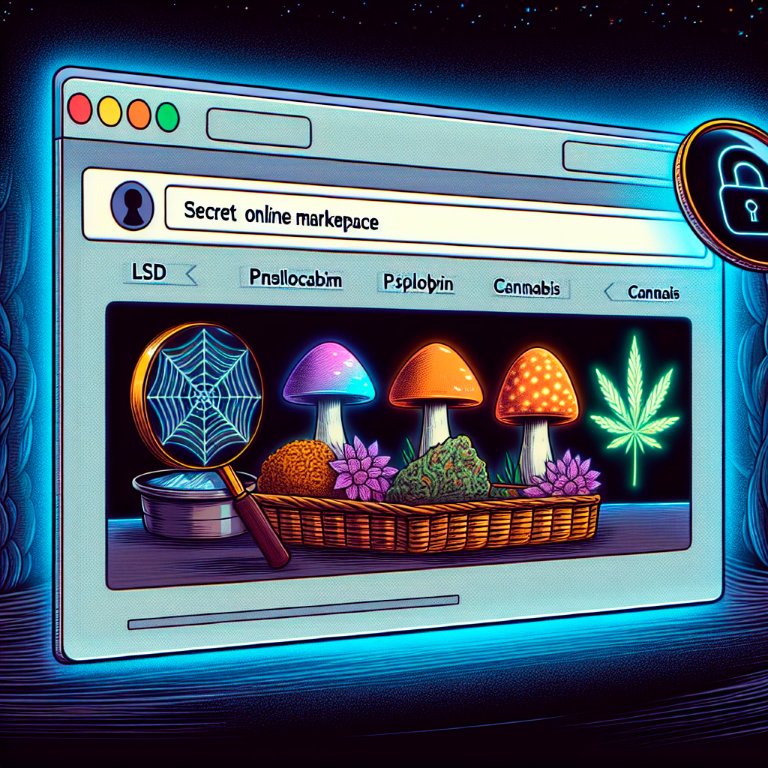
How Escrow Makes Buying on the Darknet Safe and Fair
Escrow services form the transactional backbone of secure commerce on darknets, directly addressing the inherent trust deficit between anonymous parties. The mechanism functions as a neutral third-party holding service for cryptocurrency payments. A buyer sends funds for a product to the market's escrow system, which secures them. The seller is then notified to ship the product. Only after the buyer confirms receipt and satisfactory quality are the funds released from escrow to the seller.
This process creates a balanced and self-enforcing system of incentives. For the buyer, it eliminates the risk of sending payment and receiving nothing, a common issue in unregulated spaces. The seller is protected from fraudulent chargebacks common in traditional e-commerce, as the cryptocurrency is already secured and cannot be unilaterally withdrawn by the buyer. The market's commission fee is intrinsically tied to the successful completion of these escrowed transactions, aligning the platform's financial interest with the smooth resolution of all trades.
The technical implementation relies on multisignature cryptocurrency wallets in more advanced markets. Here, releasing funds requires two out of three possible cryptographic signatures: from the buyer, the seller, and the market moderators. This distributes control and reduces reliance on a single central authority, mitigating the risk of market exit scams. Disputes are handled through a structured resolution center where both parties provide evidence, such as shipping tracking or product photos, to appointed moderators who then adjudicate the release of escrowed funds.
Thus, escrow transforms anonymous trade from a risky proposition into a calculated exchange. It provides a predictable framework where both participants can engage with confidence, knowing their financial stake is protected until the agreed-upon conditions are met. This institutionalizes safety, enabling the consistent scale and operational stability observed in mature darknet markets.
How Feedback Builds Trust and Quality in the Darknet
The feedback system is the primary mechanism for quality control and trust generation on a darknet market. Unlike traditional e-commerce, these platforms operate without legal recourse, making user-generated reputation the fundamental currency. Every completed transaction allows the buyer to leave a rating and a detailed comment regarding product quality, shipping speed, stealth, and vendor communication.
This creates a transparent and self-policing environment. Vendors with consistently high ratings and positive feedback are promoted by the platform's algorithms, gaining more visibility and sales. Conversely, vendors who engage in scamming, selling inferior products, or poor service are quickly identified through negative reviews. This collective intelligence protects the community, as new users can assess a vendor's history before purchasing. The system incentivizes honest business practices, as a vendor's entire livelihood on the platform depends on maintaining a strong reputation.
The structure of feedback often includes:
- Numerical ratings (e.g., 1 to 5 stars) for quick assessment.
- Mandatory comments that require specific details, preventing spam.
- Separate ratings for product quality and shipping/stealth methods.
- Verification that the reviewer actually finalized the order, preventing fake reviews.
This continuous loop of transaction and review establishes a stable market equilibrium. It reduces information asymmetry between buyer and seller, allowing for informed purchasing decisions. The result is a reliable commercial ecosystem where ethical vendors thrive based on demonstrable performance, directly enabling safe and anonymous commerce for the modern buyer by leveraging community verification over institutional oversight.

Building a Secure and Stable Darknet Market
The stability and longevity of a darknet market are directly dependent on its operational security, which creates the necessary environment for safe and anonymous commerce. This security is a multi-layered system designed to protect both the platform and its users from external interference. At its core, the market operates on the Tor network, which anonymizes connection data by routing it through several encrypted nodes. This makes tracing the physical location of the market's servers or the IP addresses of its users exceptionally difficult.
Beyond network anonymity, the financial layer is secured through the mandatory use of cryptocurrencies like Bitcoin or Monero. Transactions are recorded on a public ledger, but the identities of the wallet holders are not inherently linked to real-world personas. For enhanced privacy, markets encourage the use of tumbling services or privacy-focused coins, which further obfuscate the transaction trail. This financial opacity is fundamental, as it severs the direct link between the act of purchase and a traditional, identifiable banking system.
The market's internal architecture also contributes to operational security. Communications between buyers and vendors are conducted through encrypted internal messaging systems, preventing the exposure of sensitive details to external interception. Furthermore, the implementation of multisignature escrow protects financial transactions. In this system, funds are held in a secure wallet requiring more than one key to release, which prevents exit scams by a single party and builds inherent trust into the payment process.
This comprehensive security framework allows the marketplace to function with resilience. The combination of:
- Anonymized network access
- Cryptographic currency payments
- Internal encryption
- Decentralized financial escrow
creates a self-contained commercial ecosystem. It empowers the modern buyer to engage in trade with a significantly reduced risk of personal exposure, fostering a stable environment where commerce is governed by reputation and transactional efficiency rather than external physical constraints.